
Life Sciences & Biotech
Our Clients
Schlich acts for a wide range of life sciences clients who cover the gamut of enterprises from start-up businesses to large multinational corporations, from universities to mature businesses via spin out companies. Every company is unique and thus every organisation has different needs.
Our team of life sciences attorneys tailor the service we provide to match the varying aims of our clients. We are well versed in supporting the different needs of our clients, whether that is supporting a multinational business with a large existing portfolio of patent rights or a developing business founded on protecting unique technical developments.


Life Sciences & Biotech
Claiming and Protecting Your Inventions
Our Schlich attorneys are well versed in understanding and claiming rights to inventions in the life sciences arena. We prepare and file patent specifications for all aspects of life sciences technologies: from stem cell technologies to DNA-editing systems; from improved antibodies to novel microbes; from medical devices to small molecule pharmaceuticals.
Whilst our core expertise is in Europe, we have extensive experience in securing patent rights in the USA, Japan, Canada, Australia, India, China and other major marketplaces. Furthermore, we have a wide network of associates in other jurisdictions with whom we co-operate in order to gain the broadest commercially useful patent rights that we can achieve. In this way, the value of a client’s intellectual property can be best protected and realised.
Start Up Companies
Start-up companies often require significant assistance in ensuring efficient use or resources to add value to the company and obtain useful protection. We understand that patent rights and intellectual property can be the most valuable possessions owned by a start-up. Thus, our role is often to understand and advise on the efficient deployment of resources in order to protect their valuable technical advances and better develop their business.
Developing Businesses
However, sometimes the transition of a business from start-up or spin out to maturity means that in-depth intellectual property advice is required as part of the foundation and organisation of a firm. To achieve this, one of our attorneys can be intimately involved with the early commercial aspirations of our client. Thus, in addition to obtaining patent rights, we can monitor and analyse the patent rights and pending patent claims owned by competitors. We also review and analyse the state of the marketplace and the effect that ongoing deals will have on our client’s business. Thus, we are able to support a developing business through from drafting the original patent applications and guided their prosecution with the support of our associates in the relevant countries.
Large Firms
Multinational corporations may have larger internal departments whose staff have significant experience in relation to filing and prosecution of patent applications. However, multinational breadth means that detailed jurisdiction-specific advice in often needed to obtain optimum protection. While the intention of different national patent systems can be the same, navigation of the differences between jurisdictions will often require a local expert to avoid the pitfalls. This is notably the case when jurisdictions have subtle but important differences in law and practice, e.g. between the USA and the European Patent Organisation. These differences can appear slight, but can have a significant effect on the rights an applicant can obtain.
One example of this is in the drafting and prosecution of patent application relating the developments in and the optimisation of CRISPR technologies. The CRISPR-Cas system is a Nobel-prize winning leap forward in gene editing technology and the pace of its commercial development has been intense. Schlich acts for Intellia Therapeutics, Inc., both in relation to the drafting and prosecution of patent applications relating to the development and improvement of CRISPR-Cas-based gene editing, and also in opposing the patent claims of potential competitors.
Contentious Proceedings
Schlich attorneys are experienced in contentious Proceedings before the European Patent Office (EPO) and before the UK Intellectual Property Office (UKIPO). Our attorneys are skilled in delivering cost-effective advice when considering, preparing, and prosecuting contentious Proceedings. Our focus is always on yielding commercially relevant results for our clients.
By way of example, and to continue the case study above, Schlich attorneys have successfully opposed patent claims for fundamental aspects of the use of the CRISPR system in eukaryotes. Other patents have been opposed, and limited in their scope to versions comprising particular features, such as specific guides, enzymes from unusual organisms, or changes to the enzymes. In this way, our clients are better able to operate in the marketplace. However, appeals are ongoing and Schlich attorneys will be in attendance to continue to defend our client’s position.







Recent Insights
Read the latest insights from the Schlich team reporting recent cases relevant to the life sciences & biotech sector.

UPC Considers Intermediate Generalizations
The UPC Court of Appeal has recently issued its decision on SiBio Technology Limited vs Abbott Diabetes Care Inc., providing important guidance with regards to added matter. This is a further example of the UPC developing its own approach to application of the European Patent Convention (EPC).


US Supreme Court Finds that Induced Infringement Requires More Than a Skinny Label
Following our earlier article, the US Supreme Court has now provided its Decision in this matter.

Formulation PTEs on the chopping block down under
Australia’s High Court is now considering a patent term extension issue with major implications for pharmaceutical formulation patents.

Teva v Eli Lilly: a different route for antibody genus claims?
Overview Broad antibody claims have faced a difficult path in the US since Amgen v Sanofi, particularly where the claim covers a large functional genus. The Federal Circuit’s decision in Teva v Eli Lilly is therefore interesting because the court drew an important distinction: claims to antibodies themselves are not necessarily treated the same way […]
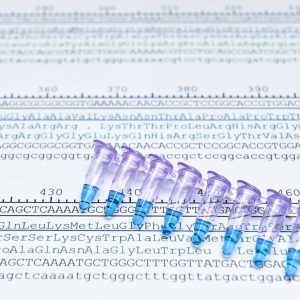
Sequence Identity Claims After T 0137/24: How Broad Is Too Broad?
The recent Board of Appeal decision in T 0137/24 provides useful guidance on how sequence identity claims are assessed under the EPC, particularly in relation to added matter and sufficiency.
A Precedential Decision by the US Court of Appeal Holds Engineered Host Cells to be Patent Eligible
The US Federal Circuit has reversed a Delaware district court’s finding of patent ineligibility, holding that REGENXBIO’s engineered host cell gene therapy claims are human made inventions, rather than simply a combination of products of nature.
US Supreme Court Agrees to Consider Induced Patent Infringement in the Context of “Skinny Labels”
The case of Hikma v. Amarin is the US Supreme Court’s first opportunity to directly address the carve-out provisions with respect to US law regarding inducement of patent infringement by “skinny label” products being used for patented medical indications.

Change is Coming to Australia! Patent Term Extension to No Longer be Available for Formulations
A recent decision of the Australian Full Federal Court has caused a significant change in practice regarding patent term extension for pharmaceutical substances in Australia.
Get in touch
Our team of UK and European Patent Attorneys and Chartered Trade Mark Attorneys are highly knowledgeable and experienced in assisting clients with all aspects of their IP needs.
Contact us now to find out more about how we could help you and your business.